Beyond code: skills and strategies for success in software development
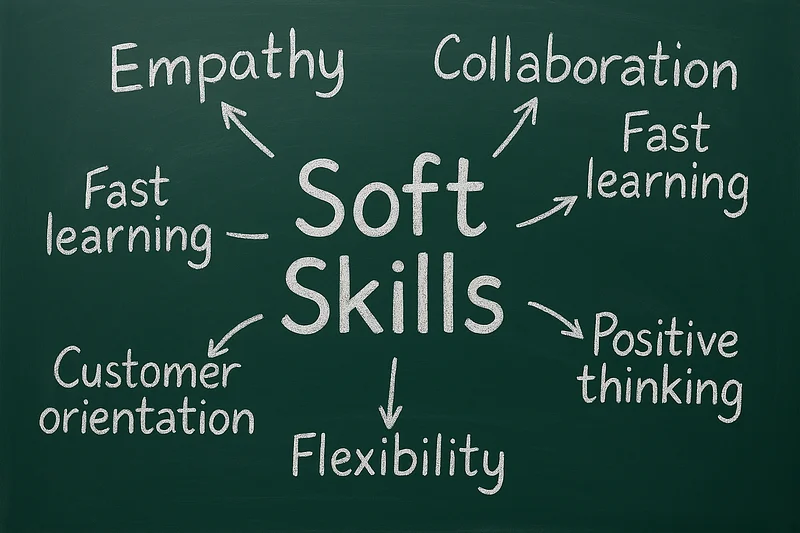
It’s natural for software developers to focus on technical knowledge and have preferences for a specific tech stack, especially at the beginning of their careers. However, is this enough to succeed in the profession in the long term?
While technical knowledge and experience in software development are fundamental, they no longer constitute a significant differentiator in today’s job market. They have become a standard expectation in a developer’s career. Being an expert in a tech stack positions you as a technical reference, but it won’t necessarily set you apart from other professionals. This is because organizations, regardless of their area of specialization, increasingly value soft skills that far outweigh technical hard skills.
Another common mistake is limiting professional development to a single area of software, such as frontend, backend, or DevOps. A successful Software Engineer must cultivate the ability to explore and adapt to different development areas, as well as work with tech stacks different from the usual ones. Adaptability and versatility are crucial for facing new challenges that arise day by day. While specialization in an area or tech stack can be valuable, one should not fear acquiring new knowledge and skills. The ability for continuous learning and openness to new technologies are essential qualities for long-term success in software development.
The current job market demands professionals with a broader profile, capable of adapting to constant changes and working in multidisciplinary environments. Soft skills, such as effective communication, teamwork, and problem-solving, are increasingly valued by companies. Additionally, the ability to learn new technologies and adapt to changes is fundamental for long-term success in software development. With the growing adoption of artificial intelligence and other emerging technologies, developers will need to develop new skills and adapt to a constantly evolving work environment.
Soft skills and their application in software development
In the dynamic world of software development, technical skills are the foundation, but soft skills are essential for a high-performance team. These interpersonal and communication skills are crucial for working on complex projects, collaborating effectively, and creating products that truly meet user needs. By cultivating these skills, developers can improve their individual performance, strengthen their teams, and contribute to the overall success of their projects.
Concrete examples:
Effective communication:
- A developer who can explain complex technical concepts to non-technical colleagues, clients, or stakeholders reduces misunderstandings and ensures everyone is on the same page.
- The ability to actively listen and provide constructive feedback fosters a collaborative environment where ideas flow freely.
Teamwork:
- In agile methodologies, the ability to collaborate, share ideas, and resolve conflicts is essential for meeting milestones and delivering high-quality products.
- Developers who can work well in teams, respecting others’ opinions and contributing to collective success, create a positive and productive work environment.
Problem-solving:
- Beyond debugging code, problem-solving involves analyzing complex situations, identifying root causes, and proposing creative solutions.
- Developers who can think critically, evaluate different options, and make informed decisions are valuable for overcoming obstacles and ensuring project success.
Flexibility and change management:
- The technological landscape is constantly evolving, so developers must be able to learn new technologies, adapt to changes in requirements, and handle uncertainty.
- Flexibility and openness to new ideas allow developers to remain relevant and contribute to innovative projects.
- Changes in the team, restructuring, capacity adjustments, or any other type of change can arise in our day-to-day. Therefore, we need this skill to adapt and work effectively in diverse situations and with different people or groups.
Time management:
- Knowing how to manage time to meet delivery deadlines.
- Knowing how to prioritize tasks and identify which ones are most important at the moment.
Empathy:
- Understanding user needs to develop software that helps them solve their problems.
- Understanding coworkers’ needs to maintain a healthy work environment.
Collaboration:
- Working together with other developers, designers, and other team members to achieve a common goal.
- Sharing knowledge and best practices to improve team efficiency.
- The sooner we discover that we can’t achieve anything alone, the faster we will develop this skill. We always depend on other people or areas to do our work.
Fast learning:
- Acquiring new skills and technical knowledge efficiently to adapt to a new reality or situation.
- This allows us to be increasingly flexible in the face of change and adapt to any context with ease.
Positive thinking:
- Maintaining an optimistic and proactive attitude in the face of challenges and obstacles.
- Ability to identify positive aspects even in the most complex or unpleasant situations, in order to maximize productivity.
- This is similar to what we do in most agile retrospective meetings: reflect on what we did well, what we didn’t do so well, and what we can improve. This way, we can learn from our mistakes and grow as professionals or individuals.
- The more we cultivate this skill, the more efficient and less negative we become, increasingly accepting change and conveying confidence and calm to our team.
Customer orientation:
- It’s about placing the customer at the center of decision-making and strategic thinking. It involves centralizing efforts to discover and satisfy customer needs, always putting yourself in their shoes, caring about them, and prioritizing their needs.
- It implies having a goal-oriented approach and focusing on achieving the greatest number of significant changes for the user in short periods of time.
- It also implies caring about the quality of the software delivered, tracking others’ work, paying attention to data, and ensuring order and clarity.
Negotiation:
- Reaching beneficial agreements with clients, suppliers, and other team members.
- It is the ability to foster consensus, achieving that divergent opinions and criteria converge in the best possible agreement, based on a goal, pact, or mutual benefit.
- It involves knowing how to defend one’s own position and interests, while understanding and respecting the interests and positions of others.
Planning and organization:
- Defining clear objectives, establishing priorities, and managing time effectively.
- Organizing work systematically and meeting established deadlines.
- It is the ability to prioritize and establish lines of action, optimizing resources to ensure compliance with expected results through effective management of one’s own work and that of others.
Analytical thinking:
- Analyzing complex problems, identifying patterns, trends, and involved risks, and proposing innovative solutions.
- Evaluating different options and making informed decisions based on data and evidence.
Teaching:
- Sharing knowledge and skills with other developers, both within and outside the team.
- Mentoring developers and contributing to their professional growth.
Leadership:
- Not only managers and technical leads should possess this skill. It is increasingly common for developers to take on responsibilities and support their leaders collaboratively in guiding and motivating the team to achieve project objectives.
- Making difficult decisions and taking responsibility for the results.
- It involves delegating and developing the team to achieve maximum performance, establishing a clear vision, and aligning others with it.
- Fostering leadership in others, empowering the team, and creating an environment of shared responsibility that allows facing various topics and actions.
Thinking outside the box:
- Generating innovative and creative ideas to solve complex problems.
- Challenging the status quo and proposing unconventional solutions.
- Ability to establish different knowledge relationships, formulate new questions, and offer original answers.
- It means not accepting things automatically, but forming your own opinion, questioning, and contributing to the discussion of a topic.
Why are soft skills important?
- Improves collaboration: Soft skills facilitate communication and teamwork, leading to greater productivity and efficiency.
- Increases customer satisfaction: Developers who can understand and communicate effectively with clients can create products that better meet their needs.
- Fosters a positive work environment: Soft skills, such as empathy and conflict resolution, contribute to a harmonious and respectful work environment.
- Drives professional growth: Developers who possess strong soft skills are more likely to take on leadership roles and advance in their careers.
Conclusion
In conclusion, while technical skills are the foundation of a software developer’s career, the true potential lies in the comprehensive development of the professional. Soft skills, which require time and dedication, not only complement technical skills but enhance them. By cultivating effective communication, teamwork, problem-solving, and other interpersonal skills, developers can become exceptional leaders, innovators, and collaborators. Investing in the development of soft skills is an investment in the future of one’s career, opening doors to new opportunities and enabling the achievement of maximum potential as a professional.
Technical skills are easily acquirable, which is why many organizations focus on soft skills as a differentiating factor in software development. In an increasingly competitive job market, organizations seek professionals who not only master technical skills but also possess strong soft skills. Soft skills, such as effective communication, teamwork, and problem-solving, are essential for success in complex projects and for collaboration with multidisciplinary teams. In a constantly changing technological environment, the ability to learn new technologies and adapt to new challenges is fundamental. Soft skills facilitate this adaptability. While technical skills are the foundation of a developer’s career, soft skills are the differentiator that allows one to stand out and advance in the profession. With the growing adoption of artificial intelligence, soft skills will be even more valued, as they are what differentiate humans from machines.
The technical skills I consider essential for a career in software development are:
- Clean Code
- SOLID Principles
- Software Testing
- Design Patterns
- Continuous Integration and Delivery (CI/CD)
- Clean Architectures
- Domain Driven Design (DDD)
- Hexagonal Architecture
- Kubernetes
- Cloud (AWS / Azure / GCP)
It is increasingly evident that Software Engineers must focus on problem-solving rather than mere code writing. The sooner developers understand this reality, the faster they will adapt to the future and the new era of AI-driven development. Automation and AI are transforming the software development landscape, freeing developers from repetitive tasks and allowing them to focus on creating innovative solutions. In an increasingly complex environment, the ability to analyze complex problems, design creative solutions, and make informed decisions is fundamental. Developers are becoming solution architects, designing intelligent systems and collaborating with AI to build more efficient and effective software. The adoption of AI and other emerging technologies requires developers to acquire new skills and stay updated with the latest advances.